
Sugar Baby Watermelon Seeds – Heirloom
Specifications
| Return Shipping Will Be Paid By | Buyer |
| All Returns Accepted | Returns Accepted |
| Item Must Be Returned Within | 30 Days |
| Refund Will Be Given As | Money Back |
| Planting Time | 10 Weeks |
| Common Name | Watermelon |
| Indoor/Outdoor | Outdoor |
| Color | Red |
| Growth Habit | vining |
| Brand | Mai's Family |
| Season Of Interest | Fall |
| Soil PH | Neutral |
| Type | Vegetable Seeds |
| Life Cycle | Annual |
| Watering | Medium |
| Unit Type | Unit |
| Genus | Citrullus |
| Sunlight | Full Sun |
| Features | Fast Growing |
| Cultivating Difficulty | Easy |
| Country/Region Of Manufacture | United States |
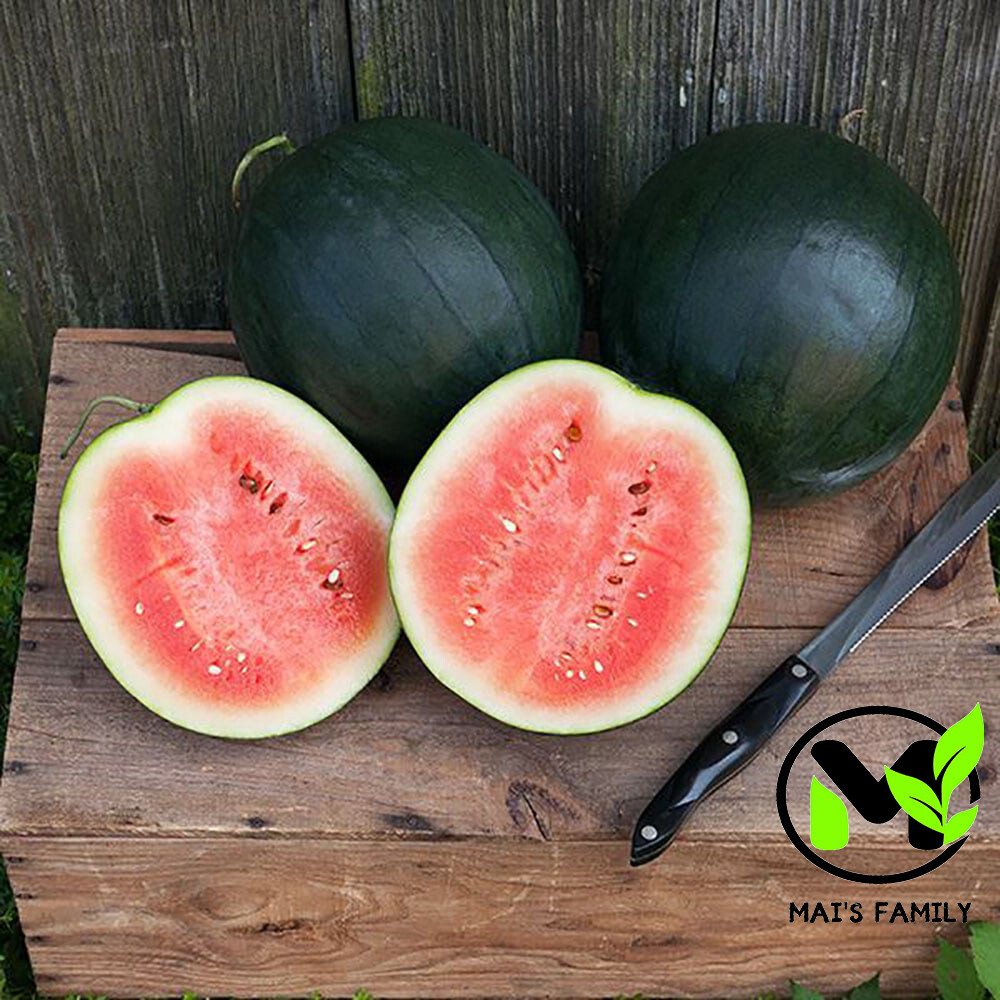
**Shipping Information** 1. For orders under $15, we use a mailing envelope (without a tracking number) with an estimated delivery time of 5-15 days. If you prefer a tracking number, you can choose either the $4.5 shipping for 3-5 days or the $60 expedited shipping service for 2-3 days during the checkout process. 2. Orders exceeding $15 are dispatched via USPS Ground (3-5 days) and include a tracking number at no additional shipping fee. Sugar Baby Watermelon Seeds The sprawling plant is fun to grow for families. Planting watermelons from seeds allows gardeners to handpick which sort of fruit they want, as watermelon comes in seedless, different colors, large and small varieties. Seedless is one of the more common plants, and although the fruit is not completely seed free, the seeds are small, transparent and edible. Before Planting: A light, well-drained soil with a pH of 6.5–7.5 and a southern exposure is ideal. Sow seeds outdoors after last frost is expect and soil temperatures are above 70°F. Triploid (Seedless) watermelon varieties need to be grown with Diploid (Seed) watermelon varieties for fertilization. Sugar Baby is good selection for a diploid fertilizer. Planting: For direct seeding, sow 1–2 weeks after last frost when soil is warm, above 70°F, 3 seeds every 18–36″, 1″ deep. Thin to 1 plant per location when seedlings have first true leaves. If transplanting, sow 2-3 seeds, 1″ deep in a 2″ peat pot 2-4 weeks before last frost date (no sooner!). Germinate at 80°F then reduce to a constant 75°F). Keep well watered until 1 week before placing outdoors. Reduce water and temperature for a week to harden seedlings. Transplant 2–3′ apart in rows 6–8′ apart. Even hardened watermelon seedlings are tender! Do not disturb roots when transplanting, and water thoroughly. Watering: When they are younger, watermelon plants require lots up water, up to 2 inches per week. If your able try not to water the fruits 1 week before harvest as over-watering can cause bland fruit. Fertilizer: Prior to planting, amend soil with compost and a higher nitrogen fertilizer. Once vines begin to ramble, side dress plants with a 5-10-5 fertilizer and again once the melons are set. Days to Maturity: There are 2 good ways to tell when a watermelon is ripe: 1) the tendril nearest the point on the vine where fruit stem attaches is browning/dead. 2) the spot where the fruit rests on the ground is pale yellow. (See each variety for days to maturity) Harvesting: Once a watermelon is picked, it doesn’t ripen any further. To harvest, take a knife and cut the watermelon from the plant, cutting the stem close to the fruit. Hold at 40-50°F and 85% relative humidity for 2–3 weeks. It is suggested to chill the watermelon prior to serving. Tips: Pruning the plant is not necessary, but it may direct more energy to growing the fruits. If you choose to prune, remove the small vines that grow laterally. To prevent rotting, gently lift the fruit as it gets bigger and turn it.
Related Items